
Something just shifted in cybersecurity, and it affects every business and every household with a computer.
Researchers at the Cloud Security Alliance published a paper this month on an AI system called Mythos. Mythos hunts for hidden flaws in software — Windows, Mac, Linux, all of it — and breaks in on its own, without a human driving it. We’ve been hearing “AI is changing cybersecurity” for a couple of years now. This is the moment that claim stopped being marketing and started being math.
Here’s what it means, in plain English, and what to do about it.
The core problem: AI is changing hacking
AI makes hacking incredibly fast. The work that used to take a skilled attacker weeks — reading through code, finding a flaw, figuring out how to exploit it — an AI can now do in a few hours. Mythos isn’t the first tool like this, but it’s the first that’s worked this reliably across every major operating system in the same run.
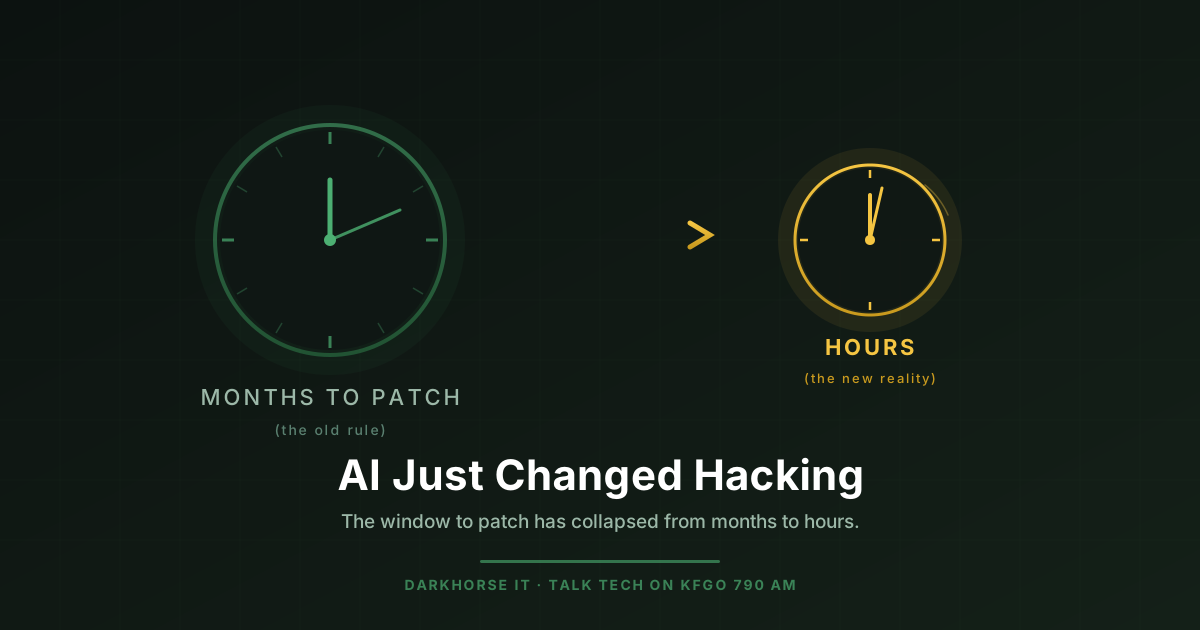
The warning window is gone. For twenty years, the unspoken rule has been: when Microsoft or Apple finds a flaw, defenders have roughly a month before criminals figure out how to weaponize it. That month was your safety buffer. Mythos shrinks that buffer to hours.
A storm of updates is coming. Because AI can find thousands of hidden flaws so quickly, the big software vendors are about to start pushing an unusual number of emergency patches. Over the next 12 months, expect more “install this update right now” notifications than you’re used to. They’ll be real. Don’t ignore them.
Fighting fire with fire
Defenders need AI too. Humans alone can’t keep up with machine-speed attacks. It’s not a matter of hiring more people — it’s a matter of pace. Security teams are starting to run their own AI helpers that scan their systems, flag weak spots, and respond to break-in attempts the moment they start. That’s the only thing that matches the speed of what’s coming at us.
Build a dedicated flaw-fixing capability. The industry’s calling this “VulnOps” — short for Vulnerability Operations. In plain English: a permanent process, or in larger shops a permanent team, whose whole job is finding and fixing flaws before anyone exploits them. If you’re a one-person shop, that doesn’t mean hiring someone — it means making sure someone (a partner, a managed IT provider, you on a Sunday) is actively hunting, not just reacting.
What you should do right now
Double down on the basics. Turn on multi-factor authentication everywhere — email, banking, business tools, everything. Separate your networks so a break-in on your guest Wi-Fi or a smart thermostat can’t reach your accounting computer. These two steps don’t stop mattering when AI attacks get faster. They matter more, because they’re what contains damage when something does get through.
Know exactly what software you’re running. You can’t protect a system you don’t know exists. Walk through your devices. Write down what’s installed. Uninstall anything old, anything unused, anything you can’t remember why it’s there. Every piece of software is a door — fewer doors means fewer ways in.
Update your risk plan. If your emergency playbook says “we have a month to patch critical flaws,” it’s already outdated. Shorten the clock. And spend at least as much planning time on recovery — how fast you get back up and running if something bad happens — as you spend on prevention.
Protect your people. This pace burns out IT and security staff. If you have a tech, support them, hire backup, and use automation where you can. If you don’t have a tech, that’s exactly where a trusted partner comes in — so there’s someone watching even when you’re not.
What DarkHorse IT is doing about it
We’ve been taking this seriously. Over the past few months we’ve been building AI-assisted patch management, vulnerability scanning, and automated response tools — sized and priced for small businesses, home offices, and residential clients across the Fargo-Moorhead metro. Not enterprise complexity. Real tools for real people.
Next week we’re announcing the first of these to our community. Subscribe to the Talk Tech RSS feed, watch for our email, or tune in Thursday at 7:40 AM on KFGO 790 AM so you don’t miss it.
The headline here isn’t “panic.” It’s “the rules changed — adjust.” The businesses and households that stay calm and get the basics right will come through this fine. The ones that assume last year’s playbook still works won’t.
If you want to talk through what any of this means for your specific setup, reach out to DarkHorse IT. That’s what we’re here for.